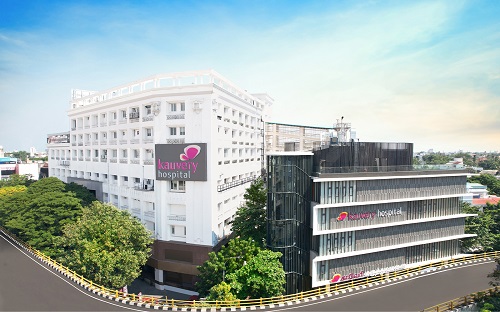

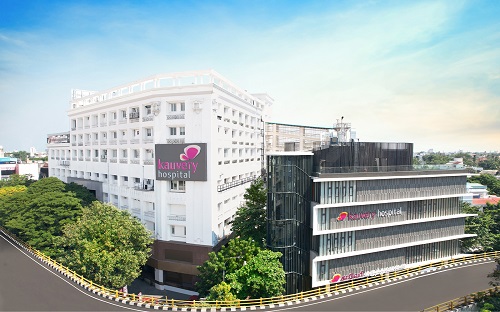
Kauvery Hospital Alwarpet has successfully performed a rare and technically complex neurovascular procedure to prevent a potentially devastating stroke in a patient with rapidly progressive vertebral artery stenosis, a condition that is distinct from routine stroke interventions and far less commonly encountered.
|
|
Kauvery Hospital Alwarpet Performs Rare, High-Risk Vertebral Artery Stenting to Prevent Major Stroke
The patient,a 42 year old gentleman with a history of diabetes, hypertension, and high cholesterol, had been asymptomatic until six months ago. While driving from Bengaluru to Chennai, he suddenly experienced difficulty controlling his car steering, noticing that the vehicle was drifting to one side. Recognising the seriousness of the episode, he immediately sought neurological consultation.
A CT angiogram revealed moderate (approximately 60%) narrowing of the left vertebral artery, one of the major arteries supplying blood to the brainstem and posterior parts of the brain. The right vertebral artery was normal. As this was his first episode, he was treated with optimal medical therapy, including dual antiplatelet agents, statins, and strict metabolic control, and was discharged with close follow-up.
However, a few months later, despite strict compliance with medication, the patient experienced a recurrence of symptoms while driving. A repeat CT angiogram showed rapid progression of the narrowing to nearly 95%, placing him at very high risk of a posterior circulation stroke, which can be life-threatening and often disabling. “Although the patient was young and initially stable on medication, the sudden progression of the blockage made intervention essential. Treating it in time ensured complete recovery without neurological damage,”, said Dr Venkatraman Karthikaeyan, Senior Consultant Neurologist, Kauvery Hospital Alwarpet.
Given the recurrence of symptoms and the unusually rapid progression despite optimal medical therapy, the multidisciplinary team recommended endovascular vertebral artery angioplasty and stenting. Unlike routine stroke procedures, which commonly involve the carotid or intracranial arteries, vertebral artery interventions are infrequently performed and are technically demanding, as the artery supplies critical areas such as the brainstem and cerebellum.
The minimally invasive procedure was successfully performed by the Interventional Radiologist of Kauvery Hospital Alwarpet. Through a tiny puncture in the groin or wrist, a catheter was navigated to the severely narrowed vertebral artery. Balloon angioplasty followed by stent placement was used to completely reopen the artery, restoring normal blood flow to the posterior circulation of the brain.
The patient was monitored in the ICU for 24 hours and shifted to the ward the next day. He was discharged on the third postoperative day. On follow-up, he remained asymptomatic and has returned to normal daily activities without any neurological deficit.
Speaking about the case, Dr. Sathya Narayanan R, Senior Consultant – Interventional Radiology, said, “This was not a routine stroke procedure. Vertebral artery stenosis progressing so rapidly despite optimal medical therapy is uncommon and potentially dangerous. Intervention in this artery requires high technical expertise, as it supplies vital structures of the brain. Endovascular angioplasty and stenting allowed us to restore blood flow safely without open surgery or prolonged hospitalisation.”
Commenting on the hospital’s advanced capabilities, Dr. Aravindan Selvaraj, Co-Founder and Executive Director, Kauvery Group of Hospitals, said,“This case reflects our focus on handling complex, high-risk conditions that go beyond standard stroke care. By combining experienced specialists with advanced minimally invasive technology, we were able to prevent a major posterior circulation stroke and ensure an excellent recovery for the patient.”
Vertebral artery angioplasty and stenting is a specialised neurovascular procedure, performed through a tiny puncture without any surgical incision. The successful outcome in this case highlights how rare, high-risk stroke conditions can be treated effectively with minimal pain, no visible scars, and faster recovery.
Kauvery Hospital Alwarpet continues to be a regional referral centre for complex neurovascular and interventional radiology procedures, offering comprehensive stroke prevention and advanced endovascular care under one roof.