
Kerala took its war on drugs to the grassroots on Monday. Home Minister Ramesh Chennithala inaugurated Toofan Thaddesham, the second phase of Operation Toofan, at Malabar College in Vengara, Malappuram. It is the state’s largest mass mobilisation against drugs so far. The programme turns the anti-narcotics campaign into a people’s movement in association with the local self-government institutions, led by the Kerala Police, with Kudumbashree networks working alongside them.
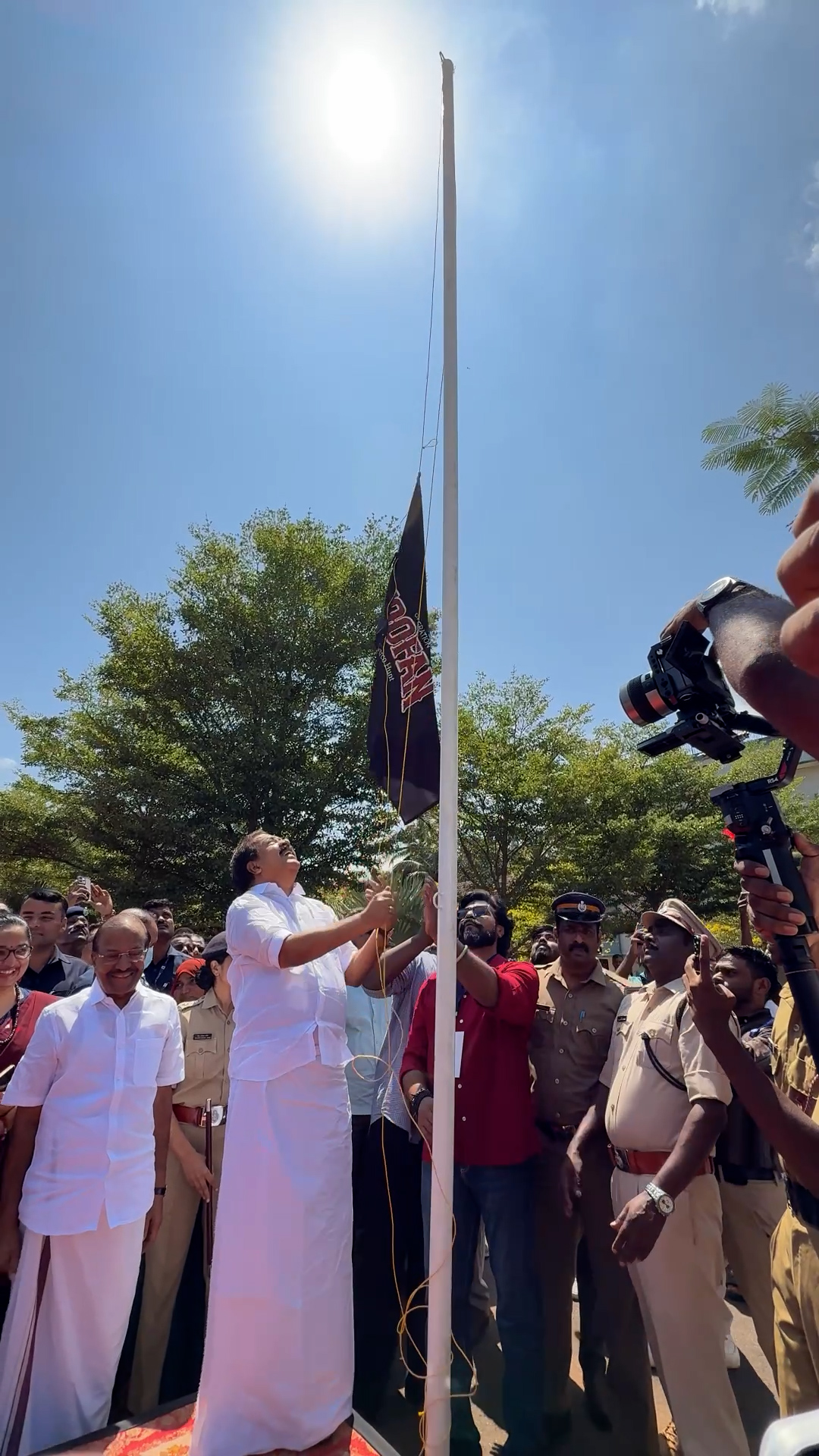 |
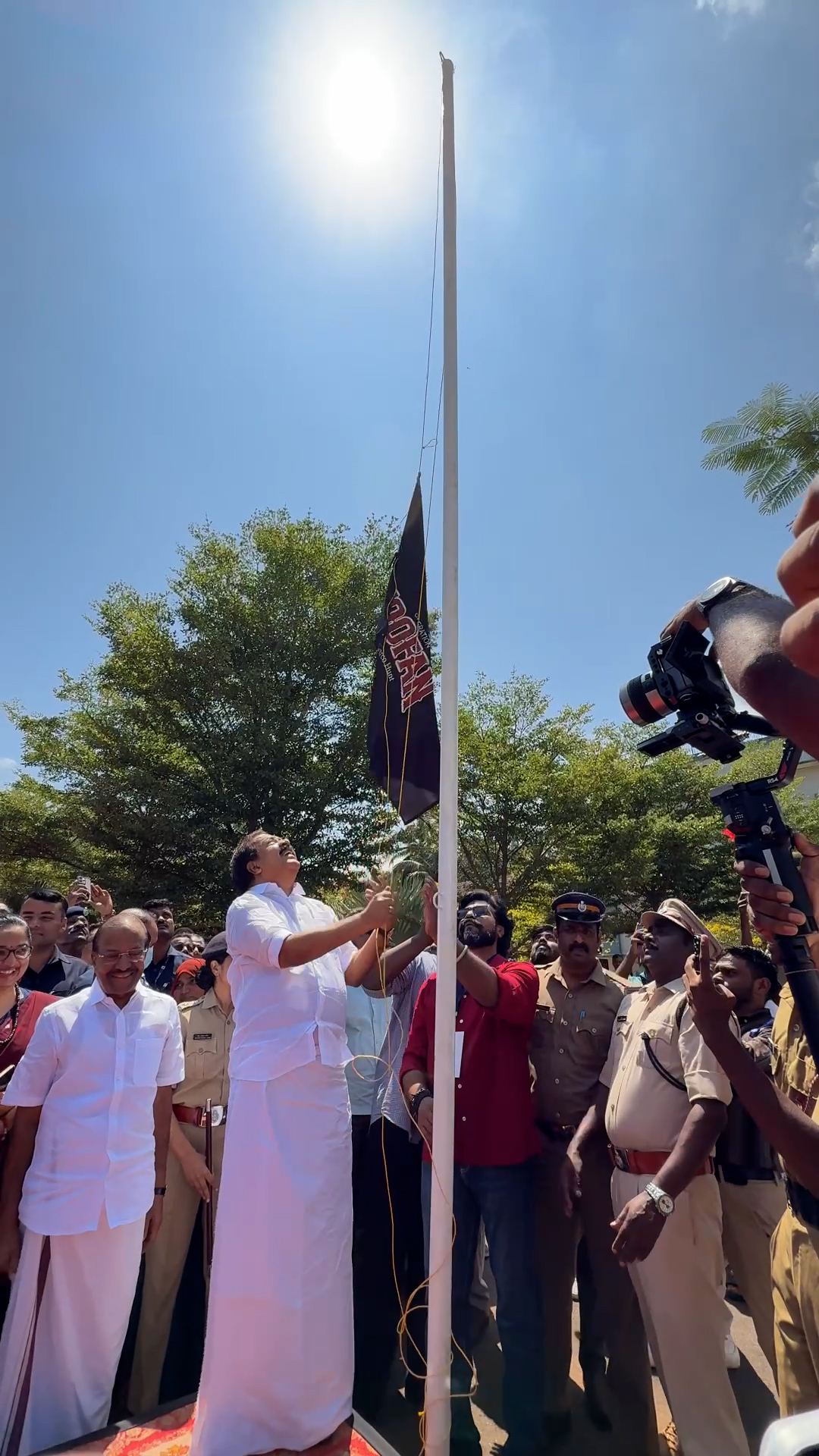
Toofan Phase 2 Begins: Home Minister Ramesh Chennithala hoists the Toofan flag in Vengara, inaugurating Toofan Thaddesham in collaboration with the Local Self-Governments
As the state-level launch took place, the Toofan flag was raised in local bodies across Kerala. Everyone present at the venue was declared a Toofan Warrior.
Chennithala called the programme a mass mobilisation against drugs that goes all the way down to the grassroots, and said the women of Kerala would be at its centre.
“The biggest strength in this fight is the participation of our mothers and sisters,” he said. “A mother is the first to notice when something changes in her child. That is why mothers will play a decisive role in this people’s movement. Mahatma Gandhi dreamt of Gram Swaraj: villages strong enough to govern and protect themselves. That is what we are building against drugs. Every ward will become its own first line of defence. It is time for every one of us to say, ‘Njan ente naadinte kaavalaal’: I am the guardian of my land.”
What Toofan Thaddhesham brings
Toofan Thaddesham is built on two tiers, so that the anti-drug campaign reaches every home in Kerala.
Toofan Jagratha Samithis in every local body:
There will be 1,034 committees, one in each of Kerala’s 941 grama panchayats, 87 municipalities and 6 corporations. Each is headed by the panchayat president, municipal chairperson or mayor. The local Station House Officer, the local body secretary and elected representatives sit on each committee, which plans, coordinates and monitors anti-drug work in its area.
Toofan Janasabhas in every ward:
Each ward will have a people’s assembly led by the ward member or councillor. It brings together residents, enrolled Toofan Warriors, Kudumbashree members, ASHA workers, Haritha Karma Sena members, rural employment scheme workers, residents’ associations and local volunteers. Their job is to carry the anti-drug message to every family, run awareness sessions and keep a close watch on the neighbourhood.
Ward volunteers will be trained with audio-visual modules covering five areas: the medical, social and economic harm of drugs, rehabilitation, and the law and safety. On the ground, the Janasabhas will run awareness classes with doctors and local police officers, hold follow-up programmes in schools and special PTA meetings, and convene Toofan neighbourhood group meetings. They will also keep watch around schools and residential areas, and help people struggling with addiction get treatment through rehabilitation and palliative care centres. Ward and local body committees will review their work every month, and the state will review it every quarter.
The aim, in the programme’s own words, is to make every Keralite a Toofan Warrior and turn Kerala into a ‘lahari-mukta desham’, a drug-free land.
Industries Minister P.K. Kunhalikutty presided over the function, and Local Self-Government Minister K.M. Shaji delivered the welcome address. Dr. Divya S. Iyer, Principal Director of the Local Self-Government Department, administered the anti-drug pledge.
About Operation Toofan
Home Minister Ramesh Chennithala launched Operation Toofan on 2 June 2026 as Kerala’s flagship anti-narcotics mission. It rests on three pillars: Toofan Strike (enforcement), Toofan Warriors (student and community mobilisation, which has reached over 1 lakh school children in person) and Toofan Care (treatment and rehabilitation). The mission has since grown into an interstate coordination effort across South India.