
Indians love doing the maths before making a big purchase. Before buying a car, we compare prices, watch countless reviews and ask everyone from our friends to our neighbourhood car expert if we’re making the right choice.
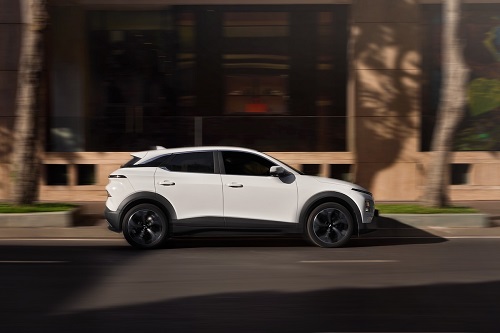 |
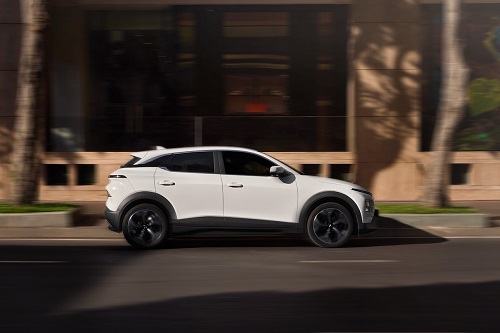
The VinFast VF 6 shows why Total Cost of Ownership matters more than ever for Indian buyers
As if that wasn’t enough, there’s now another number being discussed: Total Cost of Ownership, or TCO. But for good reason. After all, the biggest expenses don’t always arrive on delivery day. It’s what your car asks of you over the next five or seven years that often makes the biggest difference.
For India’s growing community of EV buyers, that conversation is becoming even more important. Lower running costs may be what gets people interested in electric vehicles, but what keeps them happy is everything that comes after. And that’s where the VinFast VF 6 makes its strongest case: over five years, buyers could save nearly 87% on their energy costs alone. Here’s how the numbers add up.
The Cost Saving You See
Using a VinFast standard EMI calculator model with 80% to 85% loan funding at an average interest rate of 8.5% to 9.5% over five years, buyers can expect monthly EMIs of approximately INR 29,500 to INR 31,000 for the base VF 6 Earth variant. The estimated upfront down payment ranges between INR 250,000 and INR 300,000, while VinFast dealerships also offer flexible financing solutions, including longer loan tenures and zero down payment schemes for eligible customers.
But monthly ownership costs don’t stop with the EMI.
For most Indian families, fuel remains one of the biggest recurring expenses of owning a car. Assuming a monthly driving distance of 1,500 km, a midsize petrol SUV delivering 12 km per litre at a fuel price of INR 102 per litre would cost approximately INR 12,750 every month in fuel expenses. Over five years and 90,000 km of driving, that adds up to nearly INR 765,000.
Now let’s look at the VinFast VF 6. With an efficiency of approximately 16 kWh per 100 km, covering the same 1,500 km requires around 242 kWh of electricity. At typical home charging rates, that translates to an estimated monthly charging cost of just INR 1,694 and approximately INR 101,640 over five years.
The difference? More than INR 660,000 in energy cost savings over five years. It’s enough to pay for a lot of family road trips, or if we’re being honest, quite a few weekend biryanis too.
And that’s before considering VinFast’s complimentary charging programme at V Green charging stations until 31 March 2029 and EV transition support of up to INR 154,000 for eligible customers switching from an ICE vehicle.
The Costs You Stop Thinking About
There are some ownership costs that never appear on your monthly bank statement, but you’ll certainly notice them when they’re gone. Case in point—maintenance. Conventional petrol vehicles require routine engine oil changes, spark plug replacements, fuel filter swaps and more complex powertrain servicing over time. Electric vehicles do away with much of that.
Routine annual service costs for the VF 6 are estimated at approximately INR 3,500 to INR 5,000, covering items such as cabin air filter replacements, brake fluid top ups, wheel alignment and software diagnostics. Regenerative braking also reduces wear on mechanical brakes, helping extend brake pad life to more than 80,000 km.
VinFast further strengthens the ownership proposition with complimentary maintenance for three years or 36,000 km, whichever comes first, alongside a seven year or 160,000 km vehicle warranty and a ten year or 200,000 km battery warranty.
After all of that, there’s something buyers rarely put a price on before purchasing an EV: peace of mind.
One Indian VF 6 owner recently reflected on his ownership experience after driving more than 8,000 km. Interestingly, he admitted that he was more anxious about range and public charging before buying the car than after.
Home charging proved sufficient for most of his needs, while the vehicle returned an overall efficiency of 14.8 kWh per 100 km over more than 4,000 km of driving. And what stood out most was how quickly charging became part of his routine and how little he found himself thinking about it.
His verdict? The VF 6 was “light on the pocket to run”1.